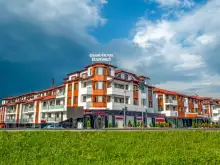
Ognyanovo - Ancient Mineral Water Oasis
Ognyanovo has a town hall, post, cinema, pharmacy, health service Nursery and kindergarten. Annually on the feast of the patronal church of the Assumption on August 15th a traditional fair is held in the village which continues for two days consisting of various concerts. Also the other part of the fair is the field full with great wealth of colorful rugs woven in the old home camps.
The village holds an altitude in 540 meters and is huddled in the rich green hilly area. Ognyanovo is a wonderful place with its own mineral water springs known as ointment among the great scenery and clean mountain air. The mineral springs have been used since Roman times!
The road lowering from Ognyanovo leads to a priceless historical landmark, the village museum Kovatchevitsa. It has been preserved specifically for the Rhodope architecture from the Bulgarian rival.
The village represents an ideal site for cultural tourism and the identification of the traditional quiet holiday Rhodope houses.
Two thousand people every months go to bathe every month in the mineral springs of Ognyanovo. Among the visitors are strangers from across Europe.
Wells in the village have also been located there since the Roman times. Praised by local residents the mineral water is clear, without color, odorless and ever so lightly mineralized, sulphate, sodium, silicon and fluorine.
Water is suitable for many diseases such as bone-joint diseases, neurological diseases, gynecological diseases, gastrointestinal and liver diseases, diseases of the excretory system, the exchange-endocrine disorders, children, adults, and those with occupational diseases use the swimming pool in Ognyanovo.
There are also many important historical monuments in the Vicinity of the village. Also located just a 15 minutes drive away is the ancient Roman town of Nicopolis ad Nestrum, situated there since the 4th century A.C.
Nicopolis ad Nestrum, means in translation, a city of the victory of Mesta River. The ancient city is located on an area of 13 hectares in the south of the village Garmen.
The city was founded by Roman Emperor Trajan I IV. After mid-century the town has been inhabited for more than 14 centuries, the most intense life was that in the late ancient era of the IV-VI century.
Fragments of votive relief of a Thracian horseman were uncovered during an excavation that cleared 280 meters of walls and foundations of public religious funeral mounds. The findings included over 95 gold and 22 other coins, glass, bronze and pottery, gold rings and other fragments were also part of the discovery. Close to the fort 2 early Christian basilicas if the IV century were also uncovered.